A finance course certificate boosts technical learning, professional credibility and career advancement in finance, accounting, treasury and banking activities. From basic skills to advanced positions, structured finance courses offer the skills and recognition that are in demand in today’s competitive workforce.
What Is a Finance Course Certificate?
A finance course certificate is an official document that is distributed after the completion of a specific financial training course. It’s a declaration that the holder has a recognized competency level in basic finance skills, confirmed by an accredited training provider or professional institution.
Finance certificates are usually much shorter and more specific than academic degrees and are directly related to the workplace. They provide opportunities for working professionals to enhance their skills in specific areas, like financial modelling, risk management or treasury operations, but without having to stop their current careers entirely.
Why Do Employers Value Finance Course Certificates?
Employers appreciate finance certifications as they allow them to have a concrete indication that a candidate has the necessary technical skills to be hired in that position. Certificates are different from academic qualifications or experience because they are not issued just for experience and knowledge, but also for the completion of rigorous, structured training in the finance field.
Challenges for Finance teams include reporting accurately, risk management, and providing input into strategic decision-making, all under pressure. Those well-trained, who are qualified with recognised certifications, generally take less time to onboard, apply knowledge with confidence, and are held more accountable for financial responsibilities.
Table 1: Finance Training Benefits
| Learning Area | Career Benefit | Workplace Impact |
| Accounting | Stronger technical foundation | Accurate reporting and compliance |
| Financial Analysis | Better business understanding | Improved investment and cost decisions |
| Treasury | Expanded career options | Effective cash and liquidity management |
| Banking Operations | Industry-specific expertise | Regulatory and operational confidence |
| Risk Management | Greater governance skills | Reduced financial exposure |
How Can a Finance Course Certificate Improve Professional Credibility?
Financial professionalism is achieved through a blend of experience, expertise and a recognised qualification. A certificate in finance will communicate to employers, clients and colleagues that you have taken the time to build up orderly knowledge and that you will uphold high standards of professionalism.
Stakeholder trust is essential in these kinds of jobs, such as financial controller, treasury manager, CFO, etc. This validates your knowledge when you have to present financial data, make business decisions, or lead finance teams.
What Technical Finance Skills Can Professionals Develop Through Finance Training?
The finance training encompasses a wide variety of technical skills, which include financial statement analysis, budgeting, corporate valuation, treasury operations, and more. Experts develop techniques for building and analyzing financial models, analyzing business performance, and reporting actionable data to C-level executives.
Practical application-based programs allow professionals to build the skills to execute variance analysis, cash flow forecasting, sensitivity analysis, and balance sheet management accurately and efficiently.
Table 2: Finance Skills Development
| Skill Area | Workplace Application | Career Relevance |
| Financial Analysis | Business decision-making and planning | Analyst, controller, CFO |
| Budgeting | Resource allocation and cost control | Finance manager, department head |
| Treasury Management | Cash flow and liquidity control | Treasury executive, CFO |
| Financial Reporting | Compliance, audit, and transparency | Accountant, financial controller |
| Forecasting | Revenue and expense projection | FP&A analyst, business finance |
| Risk Management | Identifying and mitigating financial risk | Risk manager, compliance officer |
How Does Finance Education Support Better Financial Decision-Making?
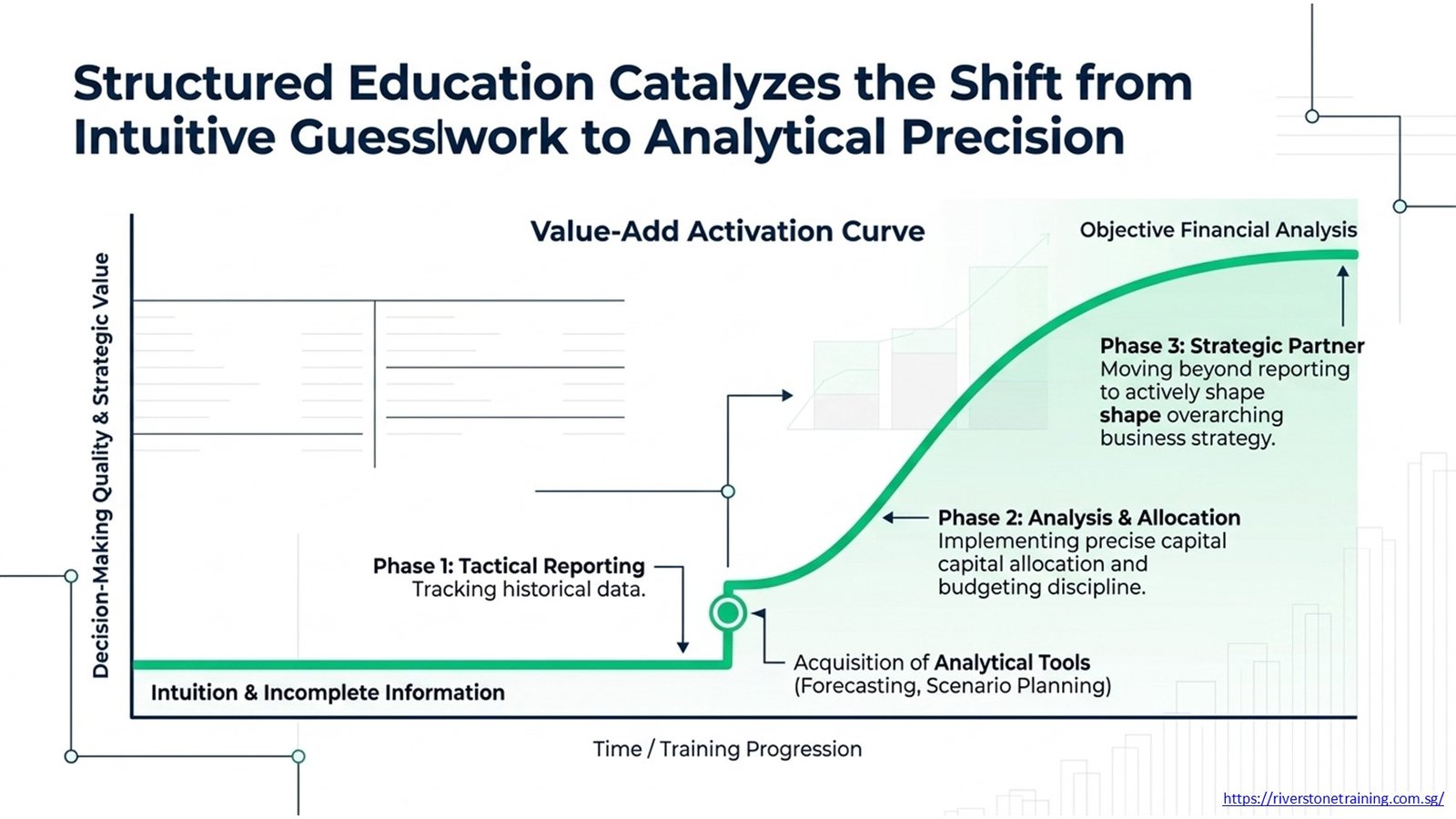
Finance education builds analytical tools that professionals can use to objectively analyze financial information and make effective business choices. Financial analysis, forecasting and scenario planning training empowers professionals to make recommended decisions based on analysis instead of intuition and incomplete information.
For business leaders and finance executives, this means more precise capital allocation, better budgeting discipline and better performance measurement. By grasping the impact of business decisions on the financial picture, finance professionals can play a part in strategy and not just reporting.
How Can a Finance Course Certificate Help Professionals Transition Into Finance Roles?
Many people from other professions, such as operations, administration, or general management, want to transition to finance but don’t have the proper qualifications to move into the position. A certificate in finance is the answer to this, offering structured training on essential skills that would make candidates more competitive for finance roles.
In finance, even within the accounting field or from banking to corporate treasury, professionals seeking to change their careers can find focused certification programmes that focus on developing the technical expertise necessary for their specific target career.
Why Are Accounting and Financial Reporting Skills Important for Career Growth?
The core of nearly all finance jobs is accounting and financial reporting. The value added to finance teams is immediately apparent with professionals who are familiar with the construction of financial statements, and how revenue is recognised, and how accruals and provisions are applied. The same skills are necessary for non-finance managers who manage budgets and are responsible for financial performance.
Accounting principles, IFRS applications, and management reporting are key aspects of the finance training that equips individuals to confidently interact with auditors, compliance teams and senior management. Completing a recognised finance course certificate in this area demonstrates technical competence and improves accuracy and reliability in the reporting function.
How Does Treasury Knowledge Support Finance Career Development?
Treasury management is amongst the most strategic business operations in corporate finance; it includes the management of liquidity, cash flow forecasting, foreign exchange risk and funding strategy. Financial experts who have treasury expertise can handle the funds of companies in various sectors.
A banking and finance course that incorporates content relating to the treasury and cash management aspects will enable professionals to gain a practical understanding of how organisations manage their working capital, optimise their funding structure and manage financial risk. As businesses are being challenged to run their businesses efficiently and to keep a balance in their finances, these skills are being increasingly valued.
How Can Finance Training Improve Analytical and Problem-Solving Skills?
When practitioners are working with actual financial data and identifying patterns and drawing meaningful conclusions, it enhances their analytical abilities in finance. Financial modelling, ratio analysis, and scenario planning exercises provide a clear and structured process for problem solving, which can be applied across business areas and functions.
Those who have taken rigorous finance courses are more effective in diagnosing poor-performing business units, evaluating investment opportunities and conveying financial risk to non-finance decision makers. These skills enable them to be useful team members in cross-functional and project teams.
What Career Opportunities Can Open After Completing Finance Training?
A certificate from a finance course opens the door to a variety of careers in the financial services industry, corporate finance and the public sector. Finance professionals with both technical skills and relevant credentials are required by employers in the banking, asset management, insurance, manufacturing and technology sectors.
Finance certifications also enable lateral progression and advancement in the career. A financial analyst with treasury training can advance to a group treasury position. Corporate finance expertise could be transferred to an accountant for mergers and acquisitions advisory. In measurable ways, structured finance education expands career paths.
Table 3: Finance Career Pathways
| Role | Relevant Skills | Finance Training Area |
| Financial Analyst | Analysis, forecasting, modelling | Financial analysis and FP&A |
| Accountant | Reporting, compliance, auditing | Accounting and financial reporting |
| Treasury Executive | Liquidity, FX, cash management | Treasury and cash management |
| Finance Manager | Strategic planning, budgeting | Corporate finance and management |
| Banking Professional | Credit, risk, operations | Banking and finance |
| CFO / Finance Director | Governance, strategy, stakeholder management | Advanced finance leadership |
How Does Continuous Learning Help Finance Professionals Stay Competitive?
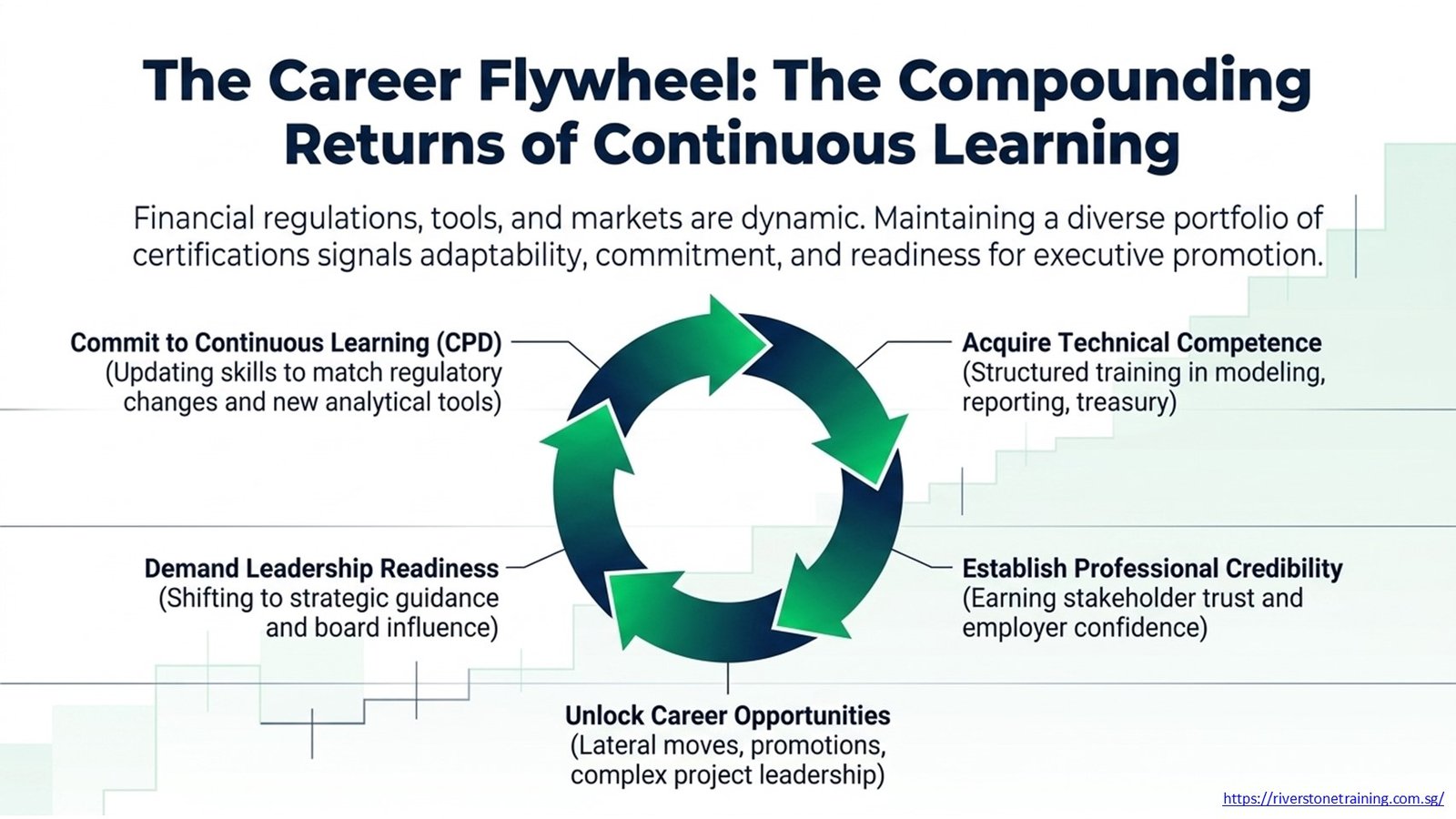
Financial matters are dynamic and constantly changing as the rules and regulations are enacted, the reports are amended, and the tools of analysis are developed. Experts who take part in ongoing professional development, gained through professionally structured training, are always up to date and competitive.
Keeping a diverse portfolio of finance certifications demonstrates to employers that you are committed to keeping your career alive, are dedicated to investing in yourself, and can adapt to change. Also, many organisations make CPD performance indicators and promotion criteria.
What Skills Are Commonly Covered in a Banking and Finance Course?
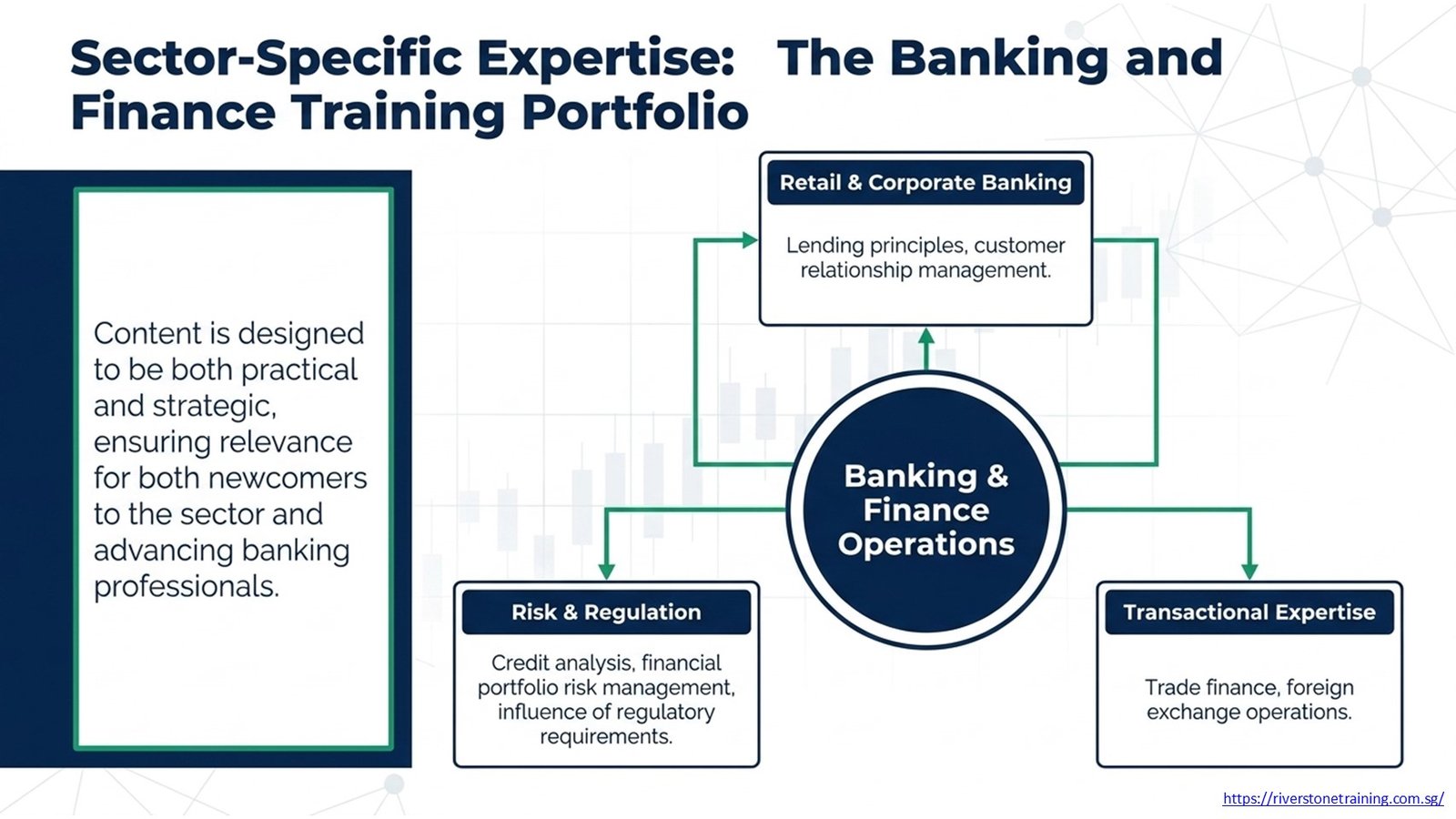
The typical banking and finance course includes operational and analytical skills needed for a career in retail banking, corporate banking, investment banking and financial services, in general. They cover credit analysis, trade finance, foreign exchange, lending principles, regulatory compliance and customer relationship management.
In addition to technical expertise, these courses include an understanding of the operations of financial institutions, risk management in financial portfolios and the influence of regulatory requirements on banking strategies. The content is both practical and strategic, making banking and finance training useful for professionals who are new to or are making progress in the banking and finance field.
Table 4: Key Finance Competencies and Professional Value
| Competency | Professional Value | Example Application |
| Analytical Thinking | Better financial decisions | Variance analysis, scenario modelling |
| Financial Literacy | Improved business performance | Budget management, cost control |
| Risk Assessment | Stronger governance | Credit risk, market risk evaluation |
| Communication | Stakeholder management | Board reporting, investor presentations |
| Technical Modelling | Faster and more accurate analysis | DCF, LBO, financial projections |
| Regulatory Awareness | Compliance and audit readiness | IFRS application, internal controls |
How Can Finance Certifications Support Leadership and Management Development?
Technical skills are not enough as finance professionals advance to senior positions. It is important for financial leaders to be able to interpret financial information to inform good advice and direction, to coordinate across sectors and workgroups and to create financial discipline across organisations. A range of finance qualifications incorporates management and leadership skills, equipping individuals for these roles.
Senior finance executives with technical knowledge and strategic thinking are more likely to impact board choices, lead them in mergers and acquisitions, and develop strong finance teams. Structured training helps fast-track the shift from a technical contributor to a strategic business partner.
What Should Professionals Consider When Selecting Finance Training?
It is important for professionals to evaluate the content of the finance course in relation to their current position and career goals when choosing a finance course. Training should address the skills gaps and deliver practical knowledge that is relevant to the workplace – not just theory. A key factor is the reputation of the programme as well as the format and the skill of the trainer.
Additionally, professionals need to consider if the certification is accepted by their industry of interest, if it is accepted for continuing professional education credits, and if the program will allow them to pursue their certification with minimal impact on their current obligations. A good course will provide current and future benefits.
How Can a Finance Course Certificate Contribute to Long-Term Career Growth?
Personal and professional growth within the finance sector hinges on continuous improvement of both technical and strategic skills. A finance course certificate fits into this sequence by contributing to formalising skills, professional commitment and access to roles and responsibilities with verified expertise.
As professionals dedicate their careers to structured finance education, they develop a more comprehensive knowledge base, expand their professional circles and enhance their standing in the field. The added benefits accumulate over time, and one of the best investments one can make for long-term career growth is finance education.
Conclusion
A finance course certificate provides finance specialists, accountants, banking employees and business leaders a structured means to build the technical and strategic skills necessary to advance their careers. Structured finance training offers skills that employers recognise and value, whether you’re involved in financial analysis and budgeting, treasury operations, or leadership development.
Qualified professionals who undertake recognised finance qualifications boost their employability, enhance their ability to perform in their current role and put themselves in the best position to progress to higher or more specialised roles. Structured programmes are one of the best career development tools at an engineer’s disposal, as credibility and competence are interwoven in engineering.
If you are just focusing on gaining your first finance qualification, or perhaps just adding to your current skills in finance, by taking a banking and finance course, you will not only provide benefits for the workplace, but also for your own future career prospects.
Table 5: Summary — Benefits of a Finance Course Certificate
| Benefit Area | Outcome | Who Benefits Most |
| Technical Skill Development | Stronger competency in core finance areas | Graduates, analysts, accountants |
| Professional Credibility | Greater employer and stakeholder confidence | Mid-career finance professionals |
| Career Advancement | Access to senior and specialist roles | Finance managers, controllers |
| Leadership Readiness | Strategic and management capabilities | Senior finance executives |
| Industry Recognition | Verified expertise across finance functions | All finance professionals |
| Continuous Learning | Adaptability and long-term employability | Finance professionals at all levels |