While location, timing, and market sentiment matter in property investment, understanding the financial side is equally important. Finance course support real estate professionals by building skills in cash flow analysis, financing structures, and valuation methods, helping them make more informed investment decisions.

Why Do Finance Skills Matter in Real Estate Investment?
How Does Financial Knowledge Help Investors Evaluate Property Opportunities?
Two or more properties can hardly be compared easily based on their prices. In order to be meaningful, a purchase evaluation should take into account the costs of operation, financing, and the assumptions made regarding expected returns on the investment, as well as the purchase price. This is the type of structured comparison that a real estate finance course is designed to build, giving professionals a consistent framework for assessing opportunities rather than relying on general impressions of a property’s appeal.
Financial literacy also enables investors to identify when the figures of a listed company don’t align with the asking price. A well-appealing property on the surface can have financing costs or expense ratios that cut into its returns as soon as it is fully modeled. One of the more tangible advantages of financial education in real estate investment is the capacity to analyze it on one’s own, without relying on external guidance.
How Can Investors Understand Property Financing More Effectively?
The terms of financing directly affect the performance of a property investment. Monthly repayments and the equity that an investor has to put in initially are influenced by all the mortgage details, interest rates, repayment terms, and LTV ratios. A financially educated investor will be in a better position to comprehend these factors in conjunction with taking a loan offer for granted as an absolute number.
The one that requires special focus is the leverage, as this affects both the upside and the financial risk of the investment. Knowing the financing is not a substitute for expert loan advice, but it can help investors ask better questions and have a better understanding of loan terms before committing to a purchase.
How Can Finance Skills Help Measure Real Estate Investment Returns?
There are a few financial indicators that are used to sum up property returns, each of which captures a different aspect of performance. The highest-profile examples are rental income and capital appreciation, but other metrics like return on investment, internal rate of return, net operating income, and cash-on-cash return give a more holistic view of the performance of a property over time.
It’s possible to be misled by a single indicator, especially when it comes to price. A property that has solid capital growth prospects can have poor cash flow, and a property that has modest capital growth prospects can have a steady cash flow. When assessing several return measures together, investors will have a more rounded picture of the financial features of a potential opportunity.
| Metric | What It Measures |
| Return on Investment (ROI) | Overall return relative to the amount invested |
| Internal Rate of Return (IRR) | Annualized return accounting for the timing of cash flows |
| Net Operating Income (NOI) | Income remaining after operating expenses, before financing costs |
| Cash-on-Cash Return | Annual cash flow relative to the actual cash invested |
| Capital Appreciation | Increase in property value over the holding period |
How Can Financial Analysis Help Manage Real Estate Investment Risks?
The investment of real estate entails a variety of financial risks, such as fluctuations in interest rates, periods of vacancy, unanticipated maintenance expenses, depreciation in property values, and the lack of liquidity in case of emergency. Financial analysis offers a structured approach to consider the potential impact of such risks on an investment when under different conditions, instead of assuming that current conditions will not change.
In this context, scenario planning is a very helpful tool. The sensitivity of projected returns to varying assumptions (like occupancy rate, interest rates, expenses, etc.) allows investors to see how these factors can affect their returns. Such analysis won’t remove risk entirely, but it will make investors more aware of what may go wrong and the financial consequences that could arise.
| Risk Factor | Potential Financial Impact |
| Interest Rate Changes | Higher borrowing costs and reduced cash flow |
| Vacancy Periods | Lost rental income and reduced overall returns |
| Unexpected Maintenance Costs | Unplanned expenses reducing net cash flow |
| Changing Property Values | Lower resale value or reduced equity position |
| Liquidity Constraints | Difficulty selling quickly without a price discount |
How Can Professional Finance Training Strengthen Real Estate Decision-Making?
What Can Professionals Learn from Structured Finance Training?
These aspects of structured finance education are not just in real estate, but also provide a solid base in financial analysis, investment principles, valuation,and financial modeling. Many professionals who complete a professional finance course find that these skills sharpen their overall business decision-making, not just their approach to property transactions.
This level of training usually goes beyond definitions and into the realm of practical application; it is related to how to read the financial statements, create a simple model, and understand the relationships between financing decisions and investment results. This means more of a rational process of deal analysis, deal terms, and financial communications for property professionals.
How Can Financial Modeling Support Real Estate Investment Analysis?
Financial models are used to estimate how many rent payments, operating expenses, financing costs, taxes, and cash flow a property would generate over its anticipated lifespan. A good model will provide the investor with a look at how these numbers interact and change over the course of the investment – not just an estimate at a single point in time.
A main advantage of financial modeling is the ability to make changes to assumptions and see how this impacts the results. When interest rates, occupancy assumptions, or expense estimates change, it can show investors how sensitive the investment is to these variables and which variables are the most important to the overall financial case.
Why Is Cash Flow Analysis Important for Property Investment?
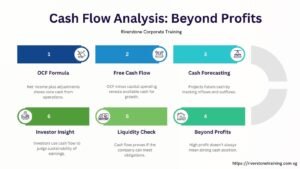
Cash flow analysis looks at the real-time and quantity of cash that comes in and out of an investment, such as the rental income, operating costs, debt service, capital costs, and taxes. This is different from profitability as a whole, because a profitable investment can be profitable on paper but have restricted liquidity for a while.
A rental property that has good long-term potential can end up causing cash flow issues if there are unexpected vacancy periods or expenses. Knowing this difference will enable investors to make plans for a time when cash reserves may be required, instead of assuming that the positive long-term projections will lead to smooth cash flow throughout the investment period.
How Does Property Valuation Support Better Investment Decisions?
The valuation methods are used by investors to determine if the asking price is fair, based on the condition of the property, the income it should generate, and the market. Discounted cash flow analysis, comparable transaction analysis, and income-based methods are all approaches that can be used to examine value.
One common method for comparing properties is an income-based valuation using capitalization rates, which is the ratio of a property’s net operating income to its value. These strategies, even on a conceptual level, can help investors to not overlook what they are being paid for a property based on the price alone.
How Can Finance Education Help Investors Compare Different Real Estate Strategies?
How Can Investors Compare Residential and Commercial Property Investments?
There are a number of reasons why the income, lease agreements, costs of running, and risk profiles of residential and commercial properties may differ. A commercial property could have a longer lease period, but also be exposed to a particular tenant or industry risk, whereas a residential property will have shorter lease periods and more frequent tenant turnover.
Financial analysis does not look at one property type as better or worse, but rather considers the two from an objective standpoint by looking at projected income, expense structures, financing considerations, etc. This choice will vary depending on the investor’s financial goals, risk tolerance, and the opportunity being considered.
| Factor | Residential | Commercial |
| Lease Terms | Typically shorter | Typically longer |
| Tenant Turnover | More frequent | Less frequent |
| Income Stability | Can vary with occupancy cycles | Often more stable within lease term |
| Risk Concentration | Spread across multiple tenants | Higher exposure to individual tenant risk |
How Can Financial Skills Help Assess Rental Property Cash Flow?
The cash flow of a rental involves projecting rental income and subtracting out any operating, financing, or other obligations. The bottom line is the amount of cash the property is expected to produce once its expenses are taken out, a key factor for many investors.
The realistic assumptions are important in this process. Understanding either the occupancy level or underestimating the maintenance and management costs can result in a cash flow statement that appears more positive than it will prove to be. Investor education will help investors make more conservative, defensive assumptions in their projections.
How Can Scenario Analysis Improve Real Estate Investment Planning?
A scenario analysis is a tool that attempts to determine how the investment would perform under various scenarios, including higher interest rates, a decrease in rental income, higher operating expenses, and longer periods of vacancy. This method allows investors to think beyond the “one size fits all” approach and factor in a variety of scenarios.
A downturn analysis is a way of understanding a potential investment’s potential for loss when the conditions are not favorable, and whether the investment will be able to handle the adverse conditions. This type of forward-looking analysis represents a valuable tool to aid in the decision-making process instead of just relying on positive projections.
Why Should Investors Consider Both Short-Term and Long-Term Financial Outcomes?
There is no direct correlation between short-term cash flow and long-term investment value. It can also be a tight cash flow in the beginning, if financing is prohibitive or the property is underoccupied, but still offers a good long-term value if rents go up and market conditions become more favorable.
Taking a longterm perspective on an investment can provide a clearer understanding of the overall investment picture, as opposed to just looking at short-term results. This time horizon is especially important for investors with longer investment horizons or specific investment goals.
What Financial Concepts Should Real Estate Professionals Understand?
How Does Leverage Affect Real Estate Investment Decisions?
Leverage means to borrow money for a part of a property. Leverage can magnify gains or losses, depending on the investment’s performance, because a trader places a larger value on a leveraged equity with a smaller equity investment.
The higher the leverage, the heavier the financial burden, such as monthly debt-service payments, that must be made whether the property is doing well or poorly. It’s important that the investor recognizes the relationship in order to consider the risks of leverage vs. the investment costs they’ll need to make.
How Does the Time Value of Money Apply to Property Investment?
The concept of the time value of money is that money received now is more valuable than money received at a later date because it can earn more in the interim. Many ways of evaluating finances in relation to property investments are based on this concept.
Discounted cash flow analysis simply takes the principle to the extreme by discounting income and value projections. Having this concept can help an investor understand more accurately the projections of the future cash flows, instead of assuming that cash flows in the future are of the same value as cash flows received in the present.
How Can Interest Rates Influence Real Estate Investment Performance?
Interest rates impact how much it costs to borrow money, which in turn impacts mortgage repayments, financing costs, and the cash flow of investment income and expenditure. Small rate increases can make a big difference to a property’s bottom line – especially if the investment is heavily leveraged.
Interest-rate assumptions are critical in financial models as interest rates may change during a holding period, and they are important in evaluating an investment’s resilience. Factors such as this variability are more likely to be recognized by investors who are aware of this and therefore better equipped to appreciate the impact that shifting financing conditions may have on their returns.
Why Is Understanding Financial Statements Useful for Real Estate Professionals?
Financial statements tell structured information regarding the financial position and performance of businesses, property-owning entities, or development projects. Real estate agents can utilize this skill to understand and apply these statements to make informed decisions about partnerships, acquisitions, or financing opportunities.
Each of the three types of statements (income statements, balance sheets, and cash flow statements) provides a different perspective: income statements provide a look at profitability, balance sheets provide a look at financial position, and cash flow statements provide a look at liquidity. Professionals using them are better equipped to verify the financial condition of a company engaged in a transaction, and not just the terms they are offered.
| Statement | Primary Focus |
| Income Statement | Profitability over a specific period |
| Balance Sheet | Financial position at a point in time |
| Cash Flow Statement | Movement of cash in and out of the entity |
How Can Finance Training Support Long-Term Real Estate Career Development?
Can Finance Skills Help Property Professionals Make Better Business Decisions?
Financial knowledge is used alongside property-market expertise to provide a structured approach to reviewing budgets, investment proposals, financing choices, and business performance. This is especially important for those who are in the process of acquiring, developing, or managing a portfolio, as decisions regarding the financial aspects of a project can have a big impact.
Financial skills do not take the place of market knowledge, but provide an extra layer of analysis that can guide more balanced decision-making, enabling professionals to consider financial aspects as well as their knowledge of the property markets and their clients.
How Can Finance Knowledge Improve Communication with Investors and Lenders?
A number of financial parties are involved in real estate deals, like investors, lenders, business partners, and more. Financial skills and knowledge of financial terms, methods of valuation, cash flow analysis, and financing structures enable professionals to better communicate and be more convincing with these parties.
This common language of finance may also help prevent miscommunication while negotiating and make the process more efficient, as well as allow the professional to explain and defend the reasoning behind a proposal to a financially astute counterpart.
How Can Financial Modeling Skills Add Value to Real Estate Roles?
Financial modeling skills are more than just about creating spreadsheets. They are used in investment analysis, property development planning, investment acquisition analysis, portfolio management, and general financial planning in various real estate positions.
The use of modeling to make decisions, test ideas, compare options, and plan scenarios, not just calculations, makes modeling practical. Modelers with this capability are more likely to make a contribution to strategic discussions within their organization.
Why Is Continuous Finance Learning Important for Real Estate Professionals?
Financial knowledge is dynamic, and if left unrefreshed from time to time, it becomes obsolete in the changing circumstances of financial markets, financing conditions, investment practices, and regulatory requirements. This is especially important in the realm of real estate, where financing models and economic cycles can have a profound impact.
Continuous learning ensures that professionals stay relevant and continue to have financial knowledge and analytical skills to adapt to changes over time, rather than following assumptions that may no longer be valid.
How Should Finance Knowledge Be Applied to Real Estate Investment Decisions?
What Steps Can Investors Take to Analyze a Property Financially?
The format of a structured financial analysis is usually the same and starts with an investment objective, then continues through a financial analysis and to a review of the investment case. This step-by-step approach will make it easier to ensure that key financial issues are not missed.
| Step | Focus |
| 1 | Defining investment objectives |
| 2 | Estimating acquisition costs |
| 3 | Forecasting income |
| 4 | Estimating operating expenses |
| 5 | Assessing financing requirements |
| 6 | Projecting cash flow |
| 7 | Evaluating potential returns |
| 8 | Testing different scenarios |
| 9 | Assessing major risks |
| 10 | Reviewing the overall investment case |
The process of this type of sequence does not ensure a specific performance, but does supply a consistent structure that investors can follow when evaluating various properties and opportunities, which can help to facilitate more disciplined investment decision-making.
How Can Investors Avoid Relying on a Single Financial Metric?
The return on investment, IRR, cash flow, property appreciation, and rental yield are all measures of investment performance. Any one of these, used alone, can produce an incomplete or false picture of the likely performance of an investment.
The multiple tests together make it easier for investors to verify and validate their findings and uncover potential strengths and weaknesses in an investment case that may not be apparent in a single number.
How Can Finance Education Turn Financial Concepts into Practical Skills?
The knowledge of financial terms is a good beginning, but financial concepts must be learned and practiced before they can be used in real-world investment decisions. Structured finance education comes into play here as it takes learners from theory to application.
Financial modeling projects, case studies, scenario analysis, and valuation exercises enable the learner to gain confidence in applying financial concepts without having to be told by someone else.
Conclusion of How Finance Course Support Real Estate
The bottom line in real estate investment determination is the financial fundamentals of financing structures, cash flow, valuation, returns, leverage, and risk. A location or market sentiment is not all that is needed to assess a property’s future financial performance.
The ability to analyze these issues is developed through finance education, which is designed to help professionals take a structured approach from the general learning of financial concepts to a more consistent and disciplined approach to assessing property opportunities. This organized process also helps to facilitate better communication with investors, lenders, and business partners, as the investment amounts and nature of the transactions increase.